


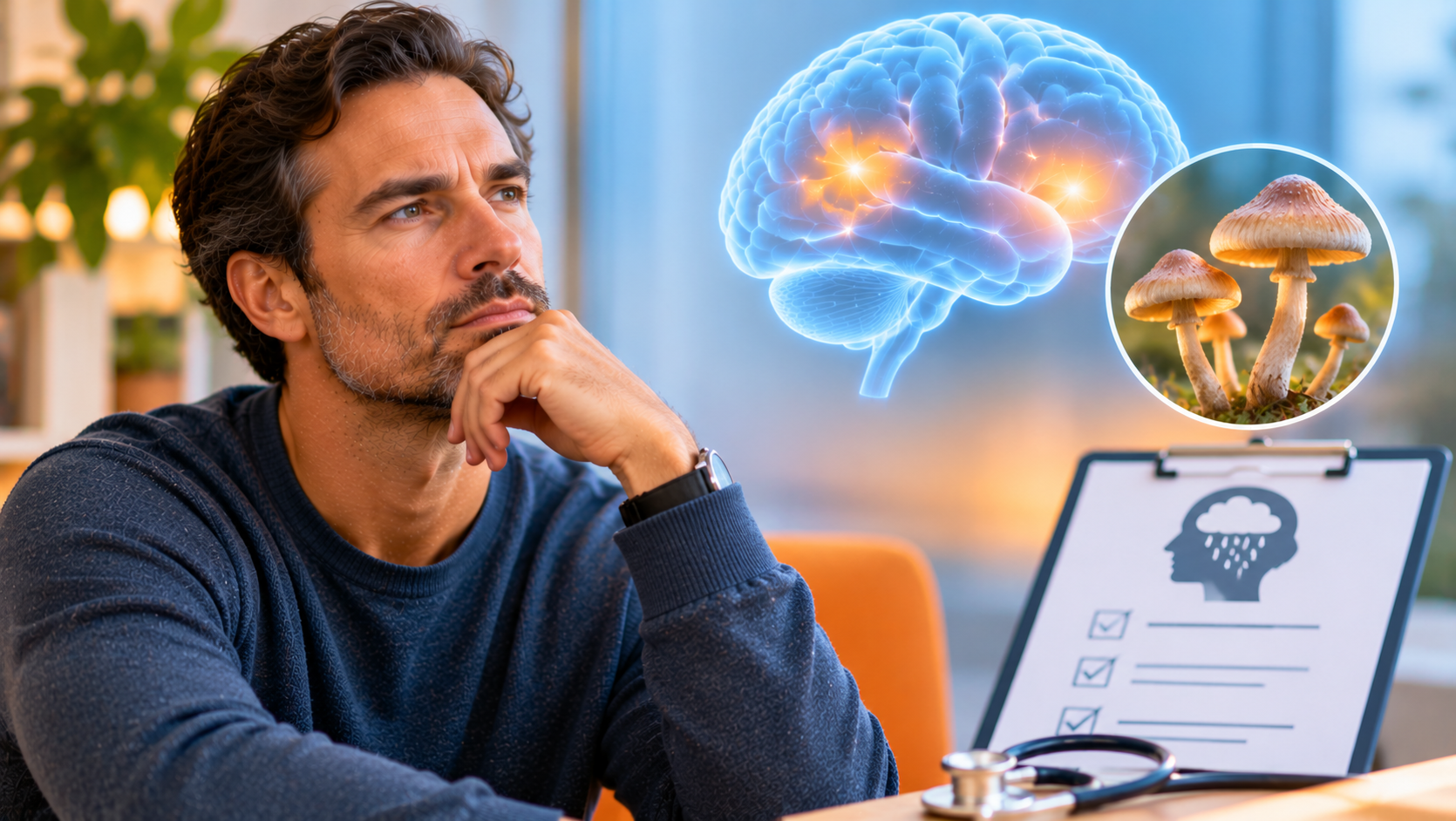

Millions of Americans struggle with major depression, and many continue experiencing symptoms despite treatment. As Compass Pathways highlights gaps in mental health care, research into Psilocybin for Depression shows promise for people facing treatment resistance. New clinical trials raise important questions about the efficacy, safety, and future of psychedelic-assisted treatment.
Understanding Psilocybin for Major Depressive Disorder
Psilocybin for depression is an emerging treatment approach that uses a psychedelic compound found in certain mushrooms to help manage depressive symptoms. Researchers are studying psilocybin-assisted therapy as a potential option for people with treatment-resistant depression who have not responded to traditional antidepressants or psychotherapy. Clinical trials suggest that psilocybin, when administered under medical supervision with psychological support, may improve mood and emotional processing, although long-term safety and effectiveness remain under investigation.
What Is Psilocybin and How Does It Affect the Brain?
Psilocybin is a naturally occurring psychedelic compound found in certain mushrooms that changes mood, perception, and thought patterns. The body converts psilocybin into psilocin, its active metabolite, which activates serotonin 5-HT2A receptors in the brain and temporarily alters communication between brain networks. These effects have also been measured in brain imaging, including reduced cerebral blood flow in the amygdala. Researchers believe these changes may support neuroplasticity and emotional processing, and preclinical research on psychedelics has observed synaptic growth, while moderate or higher doses may involve ego dissolution that could help explain possible antidepressant effects when combined with psychological support.
Compass Pathways Highlights Gaps in Depression Treatment
Compass Pathways has highlighted the unmet needs of people living with major depressive disorder (MDD), particularly those who experience persistent symptoms despite receiving treatment. Many patients struggle with ongoing sadness, fatigue, poor concentration, and reduced quality of life even after trying antidepressants or psychotherapy. These treatment gaps have increased interest in new approaches, including psilocybin-assisted therapy for treatment-resistant depression.
What Is Treatment-Resistant Depression?
Treatment-resistant depression (TRD) is a form of major depressive disorder that does not improve adequately after at least two appropriate antidepressant treatments, and some research describes enrolled patients as experiencing a treatment resistant episode of major depression. People with TRD may experience persistent sadness, hopelessness, sleep disturbances, and difficulty functioning at work or in relationships. This condition often requires additional treatment strategies, including medication adjustments, psychotherapy, or other medical interventions.
Why Current Depression Treatments Do Not Work for Everyone
Traditional antidepressants target brain chemicals involved in mood regulation, but individual responses vary based on genetics, medical conditions, symptom severity, and other factors. SSRIs have about a 60% response rate for treating depression, which helps explain continued interest in alternative approaches. Some patients experience limited symptom relief, delayed improvement, or side effects that make treatment difficult to continue. Early research suggests psilocybin has a low risk of serious side effects compared with SSRIs, which in some discussions of antidepressant risk have also been linked to long-term motor effects and related disorders. Co-occurring anxiety disorders, substance use disorders, and chronic health conditions can also affect treatment outcomes.
How Psilocybin Therapy Works for Depression
Psilocybin-assisted therapy typically combines a single dose of psilocybin with preparation, professional monitoring, and psychotherapeutic support. During clinical trials, trained staff supervise participants as psilocybin temporarily changes perception, emotional responses, and brain activity, and depressive symptomatology and other outcomes are observed and measured during and after treatment sessions. Follow-up sessions help participants process their experiences, while researchers assess changes in depressive symptoms over time.
How Does Psilocybin Therapy Address Unmet Mental Health Needs?
Psilocybin therapy is being investigated for major depressive disorder, treatment-resistant depression, and certain substance use disorders, including alcohol use disorder. Early studies have also explored its effects on anxiety associated with serious illness, while research involving post-traumatic stress disorder (PTSD) and obsessive-compulsive disorder (OCD) remains preliminary. Although these findings suggest potential benefits for specific mental health conditions, psilocybin is not an established treatment for these disorders.
Compass Pathways and the Development of COMP360 Psilocybin Therapy
Compass Pathways is developing COMP360, an investigational synthetic psilocybin formulation for adults with treatment-resistant depression. The treatment uses controlled psilocybin doses administered under professional supervision, with psychological support and safety monitoring. As of November 2026, Compass is nearing completion of its FDA New Drug Application (NDA) submission and anticipates a potential launch in the first half of 2027, subject to regulatory approval.
Recent Clinical Trials and Research on Psilocybin for Depression
Compass Pathways reported positive results from Phase 3 clinical trials COMP005 and COMP006, alongside broader randomised studies and open-label trials. In COMP006, 39% of participants receiving 25 mg COMP360 achieved at least a 25% reduction in depression scores by week six, while COMP005 showed sustained benefits in some patients through 52 weeks with additional dosing. Earlier research found a 50% response rate at week six, defined as at least a 50% improvement from baseline MADRS score, supporting psilocybin’s potential for treatment-resistant depression, although further safety monitoring and regulatory approval remain necessary. A randomized clinical trial conducted by Davis AK and colleagues, published as an open access article distributed under its original author’s copyright terms, used a study design that measured the mean difference in depression scores, with almost all participants completing follow-up assessments.
Prevalence of Depression and Treatment-Resistant Depression in the United States
Depression affects millions of American adults each year. According to the 2024 National Survey on Drug Use and Health, approximately 8.2% of adults experienced a major depressive episode. Compass Pathways estimates that roughly four million Americans have treatment-resistant depression.
Effects and Risks of Psilocybin on Mental Health
Short-Term:
- Mood Changes
- Altered Perception
- Emotional Distress
- Physical Side Effects: Acute side effects can include anxiety, nausea, and headaches, and these reactions are usually mild.
Long-Term:
- Sustained Symptom Relief
- Improved Emotional Processing
- Depression Recurrence
- Persistent Psychological Symptoms
- Unknown Long-Term Effects
Longitudinal studies in clinical research have found no lasting evidence of psychosis from psilocybin. Psilocybin has low physiological toxicity and has shown acceptable risk levels in supervised studies.
What Are the Differences Between Clinical Psilocybin Therapy and Recreational Use?
Clinical psilocybin therapy uses controlled doses, medical screening, professional supervision, and psychological support. Recreational use lacks standardized dosing and medical oversight, increasing the risk of anxiety, panic, and unpredictable reactions. Clinical treatment also includes follow-up care to monitor mental health outcomes.
Psilocybin for Depression Compared to Traditional Antidepressants
Traditional antidepressants, including SSRIs and SNRIs, are usually taken daily and may require several weeks to improve symptoms, and this comparison is broader than the specific psilocybin versus escitalopram trial literature that has examined differences in depression treatment response and psychological effects. Psilocybin therapy involves supervised dosing sessions that may produce faster improvements in some patients. However, antidepressants have established safety guidelines and FDA approval, while psilocybin remains investigational.
The Connection Between Depression and Substance Use Disorders
Depression frequently occurs alongside alcohol use disorder, opioid addiction, cannabis use disorder, and stimulant addiction involving cocaine or methamphetamine. Some people use these substances to manage emotional distress, but repeated use can worsen depression and increase dependence. Co-occurring depression and addiction often require treatment that addresses both conditions together.
Potential Benefits of Psilocybin for Depression and Co-Occurring Addiction
Research suggests psilocybin-assisted therapy may offer several potential mental health benefits, although evidence for treating depression and addiction together remains limited.
- Reduced Depressive Symptoms
- Improved Mood Regulation
- Increased Emotional Awareness
- Greater Psychological Flexibility
- Reduced Alcohol Cravings in Early Research
- Improved Treatment Engagement
- Potential Lasting Symptom Relief
Who May Qualify for Psilocybin-Assisted Therapy?
Clinical trials primarily recruit adults with major depressive disorder or treatment-resistant depression who meet specific medical and psychiatric criteria. Participants undergo screening for medication use, substance use, cardiovascular conditions, and psychiatric history. Many psychedelic studies exclude healthy participants and instead enroll people with diagnosed depression who meet strict eligibility criteria. People with psychotic disorders or certain bipolar disorders are commonly excluded because of potential safety risks.
Is Psilocybin for Depression FDA Approved?
As of November 2026, psilocybin is not FDA-approved for depression or any other mental health disorder. Compass Pathways is developing COMP360 through clinical trials and the regulatory review process. Access generally remains limited to authorized research studies and certain jurisdiction-specific programs.
Challenges and Limitations of Psychedelic-Assisted Therapy
Psilocybin-assisted therapy faces challenges involving treatment costs, limited availability, legal restrictions, and long-term safety concerns. In research, keeping a true placebo group can be difficult because the drug’s noticeable effects may weaken blinding and affect the difference between groups. Clinical sessions require trained professionals and several hours of monitoring, which may limit accessibility. Researchers must also determine which patients benefit most and how long improvements last.
Alternative Treatment Options for Depression and Co-Occurring Addiction
Alternative treatments include cognitive behavioral therapy (CBT), dialectical behavior therapy (DBT), antidepressant medications, and integrated dual diagnosis treatment. Medication-assisted treatment may help people with opioid or alcohol use disorders, while intensive outpatient programs and residential treatment provide structured mental health and addiction care. Treatment plans depend on symptom severity, substance use history, and individual needs.
The Future of Psilocybin Research and Depression Treatment
Ongoing research includes randomised trials, open-label follow-up, and systematic review work evaluating psilocybin’s effects on treatment-resistant depression. Published methods often compare a primary outcome with secondary outcomes to assess depression severity, anxiety, wellbeing, and safety over time. Researchers are also studying its possible applications for anxiety disorders and substance use disorders. Future FDA decisions and additional research will help determine its role in mental health treatment, and results suggest benefit, but larger and longer studies are still needed to confirm whether findings are statistically significant and durable.
When to Seek Help
Professional help is important when depression causes persistent sadness, hopelessness, social withdrawal, or difficulty managing daily responsibilities. People experiencing depression alongside alcohol, opioid, cannabis, or stimulant misuse may need integrated mental health and addiction treatment. Early intervention can reduce complications and improve recovery outcomes.
Depression Treatment Options
Depression treatment includes evidence-based approaches that manage symptoms and co-occurring conditions.
- Cognitive Behavioral Therapy (CBT): Changes negative thoughts and behaviors.
- Dialectical Behavior Therapy (DBT): Builds emotional regulation and coping skills.
- Antidepressant Medications: Help regulate mood and depressive symptoms.
- Transcranial Magnetic Stimulation (TMS): Stimulates brain regions involved in mood.
- Electroconvulsive Therapy (ECT): Treats severe or treatment-resistant depression.
- Ketamine or Esketamine Treatment: May relieve treatment-resistant depression.
- Intensive Outpatient Programs (IOP): Provide structured therapy while living at home.
- Residential Treatment: Offers 24-hour care for severe symptoms or co-occurring addiction.
Does Insurance Cover Treatment?
Many health insurance plans cover medically necessary depression treatment, including psychotherapy, psychiatric care, medications, and eligible outpatient or residential services. Coverage for TMS, ECT, and esketamine may require prior authorization, while investigational psilocybin therapy is generally not covered. Benefits vary by insurance provider, treatment setting, and medical necessity.
Conclusion
Psilocybin-assisted psychotherapy shows promise for treatment-resistant depression, with findings from JAMA Psychiatry and other clinical-trial reports on single dose psilocybin suggesting potential antidepressant effects in some patients. However, long-term follow-up, additional research, and careful monitoring of suicidal ideation remain essential before broader clinical use, and remission or response is typically judged by changes from baseline to follow-up, including baseline scores on depression scales such as the Montgomery–Åsberg Depression Rating Scale and Quick Inventory measures. As Compass Pathways advances COMP360, psilocybin may offer another treatment option for people living with severe depression.
Seeking Treatment? We Can Help!
At California Prime Recovery, as an in-network provider we work with most insurance plans, such as:
- Tricare
- Blue Shield
- Magellan Health
- First Health Network
- The Holman Group
- Cigna
- Anthem BCBS
- Anthem Blue Cross
- Humana
- TriWest
- Halcyon
- HMC Healthworks
- Molina
- UnitedHealthcare
- Optum
- UMR
- And More
If you or a loved one are struggling with mental health challenges or substance abuse, reach out to California Prime Recovery today. Our team of compassionate professionals is here to support your journey towards lasting well-being. Give us a call at 866-208-2390.
Also, check our blogs posted weekly on Medium.