


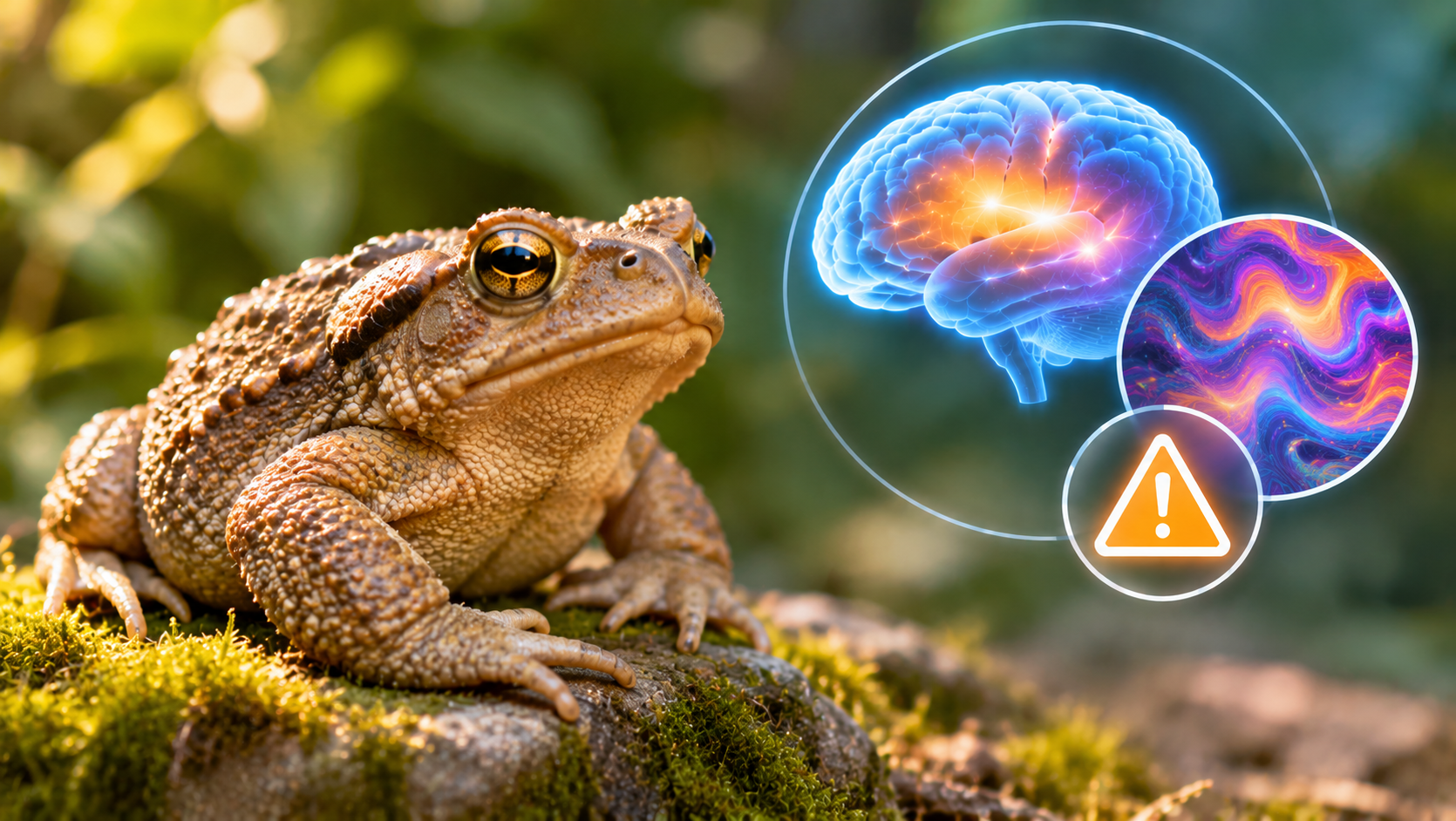

Toad licking is the practice of licking a toad’s skin or secretions in an attempt to feel psychedelic effects, but it is not a safe or reliable way to get high and can cause serious poisoning. Stories about these psychoactive secretions have fueled curiosity and news coverage, from the Sonoran Desert in Arizona and New Mexico to online communities.
Whether you’re curious about the trend, considering the risks, treating a possible exposure, or looking for clear health information, it helps to know what’s actually involved. This article explains what toad licking is, the compounds linked to its effects, the dangers and mental health risks, the legal issues, and what treatment and safety steps matter if someone has been exposed.
What Is Toad Licking?
Toad licking is the practice of licking a toad’s skin or secretions in an attempt to experience psychedelic effects or hallucinations. Certain species, including the Sonoran Desert toad, also known as the Colorado River toad, produce secretions containing 5-MeO-DMT, a powerful psychedelic compound that affects serotonin receptors in the brain. However, licking toads does not reliably produce a psychedelic high, as these substances are typically associated with effects when inhaled rather than ingested orally. Toad secretions can also contain toxic chemicals that cause nausea, vomiting, irregular heart rhythms, seizures, and potentially life-threatening poisoning. Despite its association with recreational drug use, toad licking is a dangerous practice with unpredictable health effects.
What Types of Toads, Including the Colorado River Toad, Produce Psychoactive Substances?
Certain toad species produce skin secretions containing psychoactive compounds or toxins that affect the nervous system. Common species include:
- Sonoran Desert Toad (Colorado River Toad, Incilius alvarius): Produces secretions containing 5-MeO-DMT, a powerful psychedelic compound; when threatened by predators, it secretes a milky-white toxin from its parotoid glands.
- Cane Toad (Rhinella marina): Releases toxic substances that can cause serious heart problems and poisoning.
- Common Toad (Bufo bufo): Produces defensive toxins that affect the heart and nervous system.
- Asian Common Toad (Duttaphrynus melanostictus): Produces toxic secretions that can cause severe cardiovascular complications.
The Sonoran Desert toad is the species most closely associated with psychedelic 5-MeO-DMT use. During breeding season, Sonoran Desert toads secrete a toxic milky substance, making these large toads dangerous to handle, especially at night when they are active.
Why Do People Lick Toads?
People may lick toads because they believe their skin secretions cause hallucinations, euphoria, or altered consciousness. Curiosity, recreational drug experimentation, and misinformation contribute to this behavior. However, licking toads does not reliably produce psychedelic effects and can cause serious poisoning. Facebook stories about toxic toads, glowing eyes, frogs, banana slugs, and unfamiliar mushrooms may spark curiosity, but experimenting can be deadly. Most people have a sense that risky experimentation is a bad idea, as it can harm behavioral health and mental health or even leave someone dead.
What Is the Connection Between Toad Licking and Psychedelic Drugs?
Toad licking is associated with psychedelic drugs because Sonoran Desert toads produce secretions containing 5-MeO-DMT, a powerful tryptamine psychedelic. Unlike LSD or psilocybin, 5-MeO-DMT often produces intense changes in consciousness and self-awareness rather than vivid visual hallucinations. Most reported psychedelic experiences involve inhaling the substance rather than licking toads, which carries significant poisoning risks.
What Is 5-MeO-DMT and How Does It Affect the Brain?
5-MeO-DMT, or 5-methoxy-N,N-dimethyltryptamine, is a psychedelic compound found in certain plants and Sonoran Desert toad secretions. It interacts with serotonin receptors, particularly 5-HT1A and 5-HT2A, affecting mood, perception, and consciousness. When inhaled, its effects typically begin rapidly, with smoking toad venom reported to be fast acting and produce effects within about 15 seconds, and last several minutes to around 30 minutes, although psychological aftereffects may continue longer.
What are the Psychedelic Effects Associated With Toad Licking?
The psychedelic effects associated with toad licking primarily involve 5-MeO-DMT exposure through active routes rather than licking itself. Reported effects include:
- Altered Perception: Changes in sensory awareness and time perception.
- Euphoria: Intense feelings of pleasure or emotional release.
- Ego Dissolution: Temporary loss of personal identity or self-awareness.
- Hallucinations: Visual or sensory distortions.
- Emotional Changes: Intense feelings of peace, fear, or anxiety.
- Dissociation: Feelings of detachment from the body or surroundings.
What are the Health Dangers of Licking Toads?
Toad licking can expose individuals to toxic skin secretions that affect the heart, nervous system, and digestive system. These secretions can also harm animals, and dogs can die from licking Colorado River toads. Potential dangers include:
- Heart Problems: Irregular heart rhythms and cardiac complications.
- Gastrointestinal Issues: Nausea, vomiting, and abdominal pain.
- Neurological Effects: Confusion, dizziness, and seizures.
- Psychological Distress: Anxiety, panic, and disorientation.
- Severe Poisoning: Potentially life-threatening toxic reactions.
The National Park Service warns visitors to stop licking Sonoran Desert toads, a large amphibian whose milky secretions can cause deadly poisoning rather than harmless fun or predictable psychoactive effects. Like most things involving toxic substances, toad licking carries unpredictable health risks.
Can Toad Licking Cause Poisoning or Overdose?
Yes, toad licking can cause serious poisoning from toxic skin secretions, particularly compounds that interfere with heart function. Symptoms include vomiting, irregular heartbeats, seizures, and potentially cardiac arrest or death in a person exposed to enough toxin. Severe reactions require emergency medical attention, and suspected exposure should be reported to Poison Control at 1-800-222-1222. Possession of Colorado River toad secretions can also lead to criminal charges.
Can Toad Licking Cause Hallucinations or Psychosis?
Toad licking does not reliably cause hallucinations, but 5-MeO-DMT exposure through an active route can produce intense perceptual changes and temporary detachment from reality. Psychedelic exposure may also trigger panic, paranoia, or psychosis-like symptoms, particularly in individuals with existing mental health vulnerabilities. Persistent symptoms require professional evaluation.
Is Toad Licking Addictive?
Toad licking is not recognized as a distinct addiction, and 5-MeO-DMT is not known to cause typical physical dependence or withdrawal. However, repeated psychedelic substance misuse may develop into harmful behavioral patterns involving psychological dependence and continued use despite negative consequences.
Is Toad Licking Legal?
Toad licking laws vary by location, but 5-MeO-DMT is classified as a Schedule I controlled substance under U.S. federal law. Possessing or distributing unauthorized 5-MeO-DMT is illegal, and wildlife regulations may also bar collecting or disturbing certain toad species, including Bufo alvarius in New Mexico and California. The Colorado River toad is listed as threatened in several states. In Arizona, limited collection may be allowed in some circumstances, including bagging up to 10 toads with a fishing license. Licking a toad itself is not automatically a federal drug offense.
Prevalence of Toad Licking
The prevalence of toad licking remains unknown because national drug surveys do not specifically track the practice. Research primarily examines 5-MeO-DMT use, including synthetic substances and toad-derived secretions. Although psychedelic use has gained attention, reliable statistics on actual toad licking are unavailable.
Effects and Risks of Toad Licking
Short-Term:
- Nausea and Vomiting
- Dizziness and Confusion
- Irregular Heartbeat
- Anxiety and Panic
- Seizures
- Loss of Consciousness
Long-Term:
- Cardiac Complications
- Neurological Damage
- Persistent Psychological Symptoms
- Worsening Mental Health Conditions
- Repeated Poisoning
- Problematic Substance Use
Long-term effects of toad licking remain poorly studied, with most documented serious complications involving acute poisoning.
Are There Any Potential Benefits Associated With Toad-Derived Psychedelics?
Early research suggests that 5-MeO-DMT, a psychedelic compound found in Sonoran Desert toad secretions, may have potential benefits for depression, anxiety, and emotional well-being. Small studies have reported improvements in mood and psychological distress, but larger clinical trials are needed to confirm safety and effectiveness. These findings do not establish benefits from licking toads or using unregulated toad venom.
What Is the Difference Between Toad Licking and Smoking Toad Venom?
Toad licking involves direct oral contact with a toad’s skin secretions, which can cause toxic poisoning without reliably producing psychedelic effects. Smoking or vaporizing dried Sonoran Desert toad secretions can deliver 5-MeO-DMT through the lungs, producing rapid and intense psychedelic effects. Both practices carry serious health risks, including toxic exposure, psychological distress, and potentially dangerous physical reactions.
What are the Risk Factors for Toad Licking and Psychedelic Substance Abuse?
Risk factors for toad licking and psychedelic substance misuse include curiosity, peer pressure, recreational drug experimentation, and misinformation about psychedelic benefits. Individuals with a history of substance use disorders, impulsive behavior, or mental health conditions may face additional risks. Combining psychedelics with alcohol, cannabis, stimulants, or other substances can increase the likelihood of harmful reactions.
How Does Toad Licking Affect Mental Health and Co-Occurring Disorders?
Toad licking can cause psychological distress, confusion, anxiety, and panic through toxic exposure. Psychedelic substances such as LSD, psilocybin, DMT, and 5-MeO-DMT may worsen co-occurring mental health disorders, including major depressive disorder, generalized anxiety disorder, bipolar disorder, post-traumatic stress disorder (PTSD), and schizophrenia. Individuals vulnerable to mania or psychosis face increased risks of severe psychological reactions and temporary detachment from reality.
Can Toad Licking Worsen Anxiety, Depression, or Bipolar Disorder?
Toad licking can cause frightening physical and psychological reactions that may intensify anxiety or emotional distress. Exposure to 5-MeO-DMT through an active route may also trigger panic, mood instability, or psychosis-like symptoms, especially in individuals with bipolar disorder or a history of psychosis. Research has not established that toad licking treats depression or other mental health conditions.
What are the Warning Signs of Psychedelic Substance Misuse?
Psychedelic substance misuse may involve repeated use of LSD, psilocybin mushrooms, DMT, 5-MeO-DMT, or mescaline despite negative consequences. Common warning signs include:
- Frequent Use: Repeatedly seeking psychedelic experiences despite harmful outcomes.
- Risky Drug Combinations: Mixing psychedelics with alcohol, cannabis, MDMA, or stimulants.
- Psychological Distress: Experiencing recurring panic, paranoia, or confusion.
- Neglected Responsibilities: Missing work, school, or personal obligations.
- Continued Use: Taking psychedelics despite worsening mental health symptoms.
- Loss of Control: Difficulty reducing use despite repeated attempts.
What Should You Do If Someone Experiences Toad Poisoning?
Immediately stop exposure, rinse the mouth with water, spit out the rinse, and contact Poison Control at 1-800-222-1222. Do not induce vomiting or administer medications without medical guidance. Call 911 for seizures, breathing difficulties, loss of consciousness, or serious heart symptoms.
When to Seek Help
Seek professional help when psychedelic substance use causes repeated distress, risky behavior, worsening mental health, or difficulty controlling use. Persistent anxiety, depression, paranoia, or disrupted daily responsibilities may indicate a need for treatment. Severe poisoning, psychosis, or seizures require emergency medical attention.
Treatment Options for Psychedelic Substance Misuse
Treatment focuses on reducing harmful substance use, managing mental health symptoms, and preventing relapse. Common options include:
- Medical Evaluation: Identifies toxic exposure and physical or psychiatric complications.
- Medical Stabilization: Manages acute intoxication and poisoning.
- Residential Treatment: Provides structured, live-in addiction care.
- Partial Hospitalization Programs (PHP): Offer intensive daytime treatment.
- Intensive Outpatient Programs (IOP): Provide structured therapy with flexible schedules.
- Cognitive Behavioral Therapy (CBT): Addresses triggers and harmful behaviors.
- Dialectical Behavior Therapy (DBT): Improves emotional regulation and coping skills.
- Dual Diagnosis Treatment: Addresses substance misuse and co-occurring mental health disorders.
- Relapse Prevention: Builds strategies to reduce future substance misuse.
Does Insurance Cover Treatment?
Many insurance plans cover medically necessary addiction and mental health treatment, including residential programs, outpatient care, and therapy. Coverage varies by provider, policy benefits, and medical necessity. Verify deductibles, copayments, and network requirements before treatment.
Conclusion
Toad Licking carries serious health risks, including toxic exposure, psychological distress, and potentially life-threatening poisoning. While certain species of toads contain psychedelic compounds, direct contact with their secretions can harm humans and lead to emergency room visits. Understanding these dangers can help protect individuals, families, and communities from unsafe experimentation.
Seeking Treatment? We Can Help!
At California Prime Recovery, as an in-network provider we work with most insurance plans, such as:
- Tricare
- Blue Shield
- Magellan Health
- First Health Network
- The Holman Group
- Cigna
- Anthem BCBS
- Anthem Blue Cross
- Humana
- TriWest
- Halcyon
- HMC Healthworks
- Molina
- UnitedHealthcare
- Optum
- UMR
- And More
If you or a loved one are struggling with mental health challenges or substance abuse, reach out to California Prime Recovery today. Our team of compassionate professionals is here to support your journey towards lasting well-being. Give us a call at 866-208-2390.
Also, check our blogs posted weekly on Medium.